

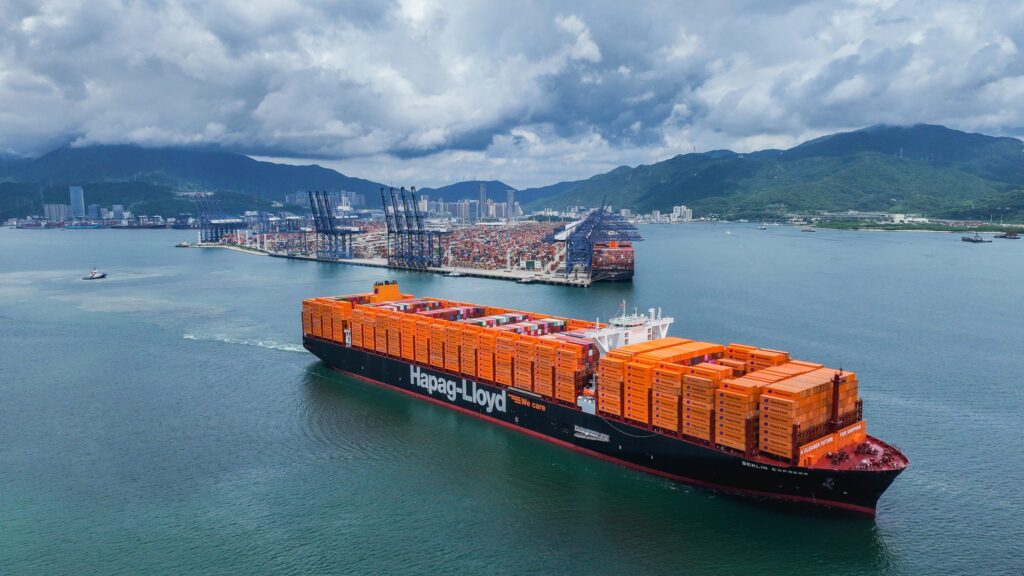
EBIT falls to 2.5 billion euros
The Hamburg-based shipping company Hapag-Lloyd has published its annual report for 2023. It records a sharp decline, which was reportedly expected. EBITDA amounted to 4.5 billion euros, EBIT to 2.5 billion euros and the Group result to 3 billion euros.
Rolf Habben Jansen, CEO of Hapag-Lloyd AG, explains: "We have achieved the third-best Group result in the history of our company - even if it is significantly below the exceptionally strong year 2022 due to the normalization of global supply chains. We were able to significantly increase customer satisfaction and further digitalize our container fleet." Hapag-Lloyd intends to further expand its commitment in the terminal and infrastructure segment in the future and expand its business activities in liner shipping in India and Africa. The company also aims to be climate-neutral by 2045.
Details on individual segments
According to the figures, the transport volume in the liner shipping segment increased by 0.5% to 11.9 million TEU. However, transport expenses fell by 11% to 11.9 billion euros. This was due to lower demurrage and storage charges for containers and a lower bunker consumption price. Overall, turnover in this segment amounted to 17.8 billion euros. EBITDA fell to 4.4 billion euros and EBIT to 2.5 billion euros.
The Terminal and Infrastructure segment is currently under construction and will therefore not achieve the results as in 2022. Turnover amounted to EUR 187 million, EBITDA to EUR 46 million and EBIT to EUR 19 million.
Future prospects
Accordingly, the Executive Board and the Supervisory Board of Hapag-Lloyd AG have decided to offer a dividend of EUR 9.25 per share for the 2023 financial year. This would correspond to a total amount of EUR 1.6 billion, making it the third-highest dividend payout in the company's history.
The forecast for the current financial year 2024 is EBITDA of between EUR 1 billion and EUR 3 billion and EBIT of between minus EUR 1 billion and EUR 1 billion. A decline is assumed.
"We have made a satisfactory start to the current financial year, but the economic and political environment remains volatile and challenging - particularly in view of the current situation around the Red Sea. [...] As part of our Strategy 2030, we are once again focusing much more intensively on quality and sustainability," says Jansen.