

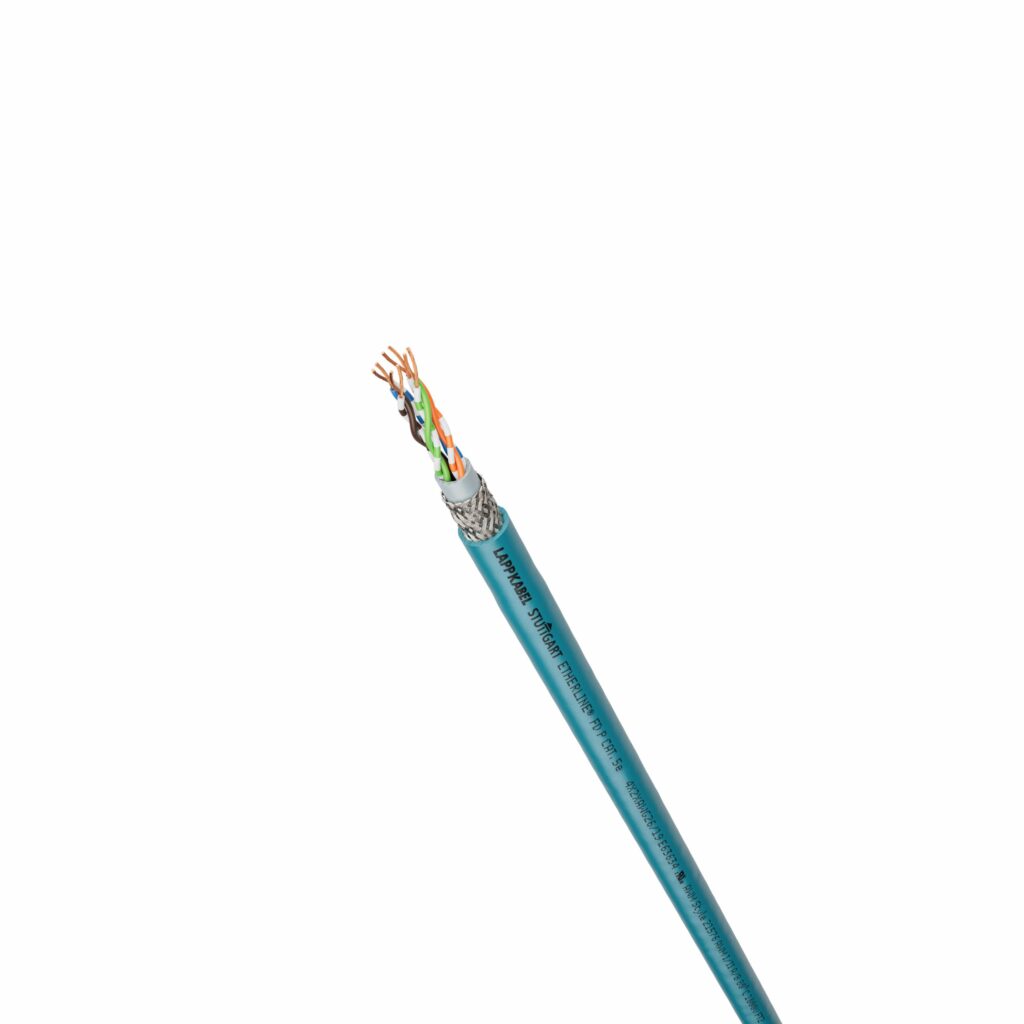
Reduction of the CO2 footprint by 24 percent
The Lapp Group, a family-owned company specializing in the manufacture and sale of electrical engineering solutions, wants to improve the carbon footprint of its own products and processes.
To this end, Lapp has already presented a prototype of cables with bio-based sheathing in 2023. Due to the high prices of sustainable materials, the company says it initially asked its customers to what extent they would invest in sustainable products.
Due to the high demand, Lapp is now starting series production of a data cable called "Etherline FD bioP Cat.5e".
Via the new data line
The new data cable consists of 43 percent renewable raw materials. Nevertheless, the product properties remain the same as the standard version made purely from fossil raw materials. The new cable reduces the CO2 footprint by 24 percent compared to a fossil-based cable.
According to the information provided, it can be used in a variety of ways, for example in moving machine parts.
The line can provide up to 1000 Mbit/s, ensuring a fast exchange of information.
A copper shielding braid prevents electromagnetic interference. Other components also protect against fire.
Planning for the future
Lapp announces that its next product will be the "Ölflex Classic FD 810" cable. A prototype has already been completed. The challenge here is to find an alternative to polyvinyl chloride (PVC), as PVC cannot yet be produced from pure bio-based raw materials.
Alexander Terpe, Head of Product Development Cables at LAPP, explains: "ÖLFLEX® CLASSIC FD 810 is a very versatile cable that is also designed for drag chains. The drag chain properties of the material can therefore also be tested on this example. It therefore offers us a wide range of tests for carrying out material tests for certifications."
Lapp is also working on using plastic waste as secondary materials, for example as filler in pipes.