




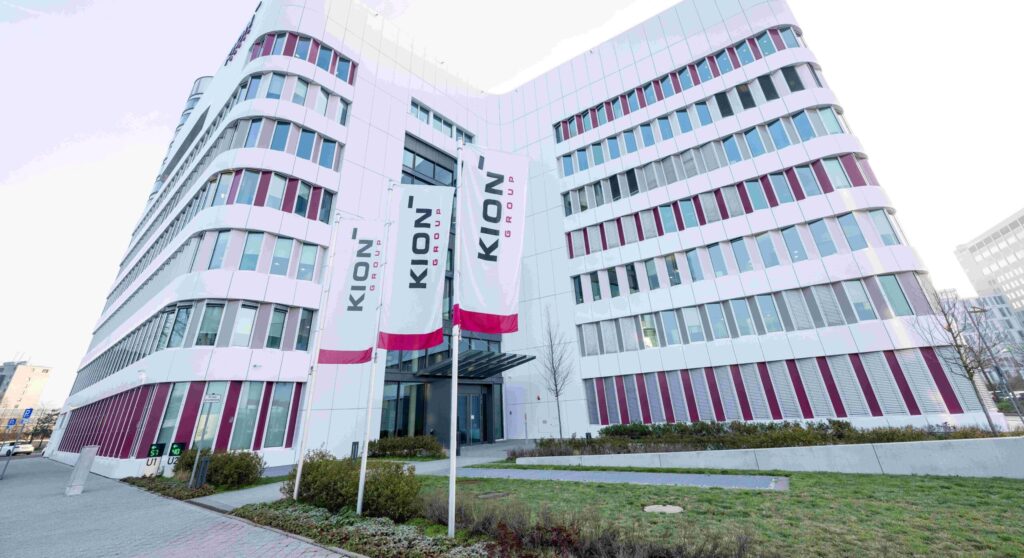
Strengthening resilience despite good financial year 2024
The Kion Group AG has a new Efficiency programme initiated. After a successful financial year 2024, Kion would like to secure its current momentum and maintain its room for manoeuvre for investments, according to its press release.
At the same time, Kion wants to further expand its leading role in the market in a rapidly changing macroeconomic and geopolitical environment.
„KION is at a pivotal point in its history. Our preliminary results for the financial year 2024 show that we can deliver strong results in a challenging environment,“ said Rob Smith, CEO of Kion Group AG. Regarding the product portfolio, Smith explains: „We are the first in the industry to work with physical AI from NVIDIA, creating the warehouse of the future and reshaping our industry.“
Preliminary business figures
In the 2024 financial year, the provider of industrial trucks and supply chain solutions achieved a turnover of 11.5 billion euros, according to its own figures. In the previous year, turnover totalled 11.4 billion euros.
Kion was able to increase EBIT from 791 million euros in 2023 to 917 million euros in 2024. The adjusted EBIT margin increased from 6.9 per cent to 8.0 per cent. The company is forecasting a free cash flow of 702 million euros for 2024.
Optimising efficiency
The efficiency programme is intended to take account of changes in the macroeconomic environment. As Kion emphasises in its press release, the European economies are only developing modestly. This affects important customer industries in the Industrial Trucks & Services segment. According to Kion, Chinese competitors are currently expanding their market position in this segment.
According to its press release, Kion intends to achieve annual cost savings of around 140 to 160 million euros with the efficiency programme. These savings should be fully effective by 2026.
Christian Harm, CFO of Kion Group AG, explains: „In order to maintain our scope for future-proof investments and strengthen our competitiveness and resilience, we need to optimise our cost base. This requires structural and sustainable measures.“