




First and foremost:
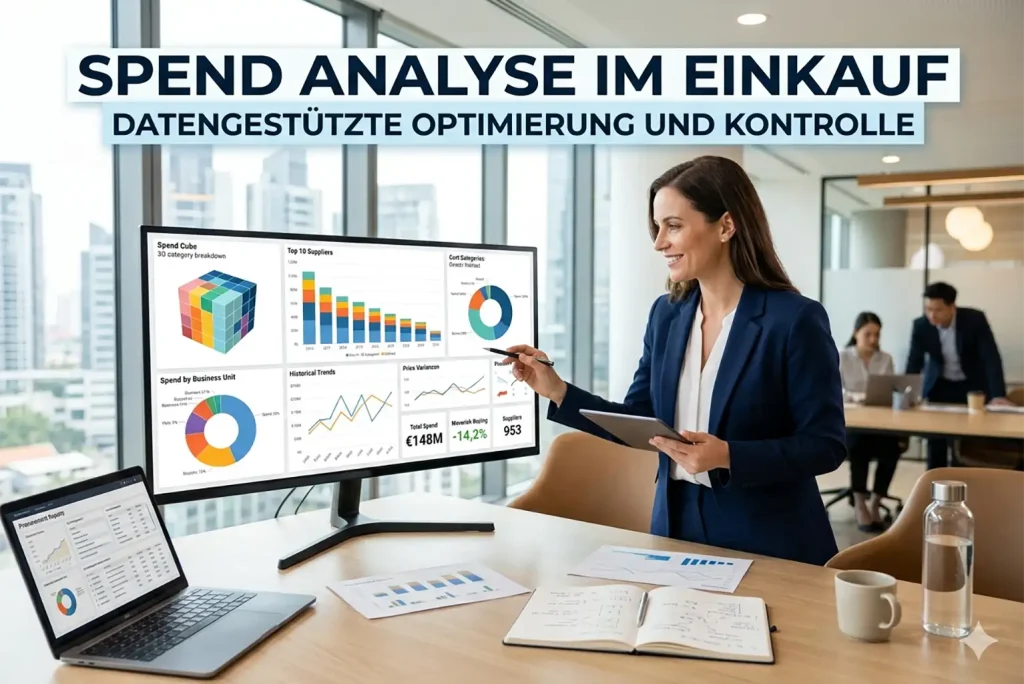
The Spend Analysis is the strategic navigation system for every modern purchase. It transforms unstructured financial data into spend visibility, identifies Savings potential from an average of 10 % to 15 % and is the only effective weapon against Maverick Buying. Without this data-driven foundation, Category Management operates blind and misses out on massive optimisation potential in terms of costs and risks.
Key Facts on Spending Analysis
- Core Concept: Systematic identification, cleansing, and classification of all output data to create transparency.
- The „Spend Cube“: Analysis by the dimensions Who (demand carrier), What (product group), and With whom (supplier).
- Key KPIs: Maverick Buying Quote, Addressable Spend Volume, Supplier Concentration, Tail Spend Share.
- Methodology: Use of classification standards (eCl@ss, UNSPSC) and strategic models (ABC analysis, Kraljic matrix).
- Technology Trend: Transition from manual Excel analysis to AI-powered spend analytics dashboards with predictive capabilities.
1 Definition: What is a spend analysis in detail?
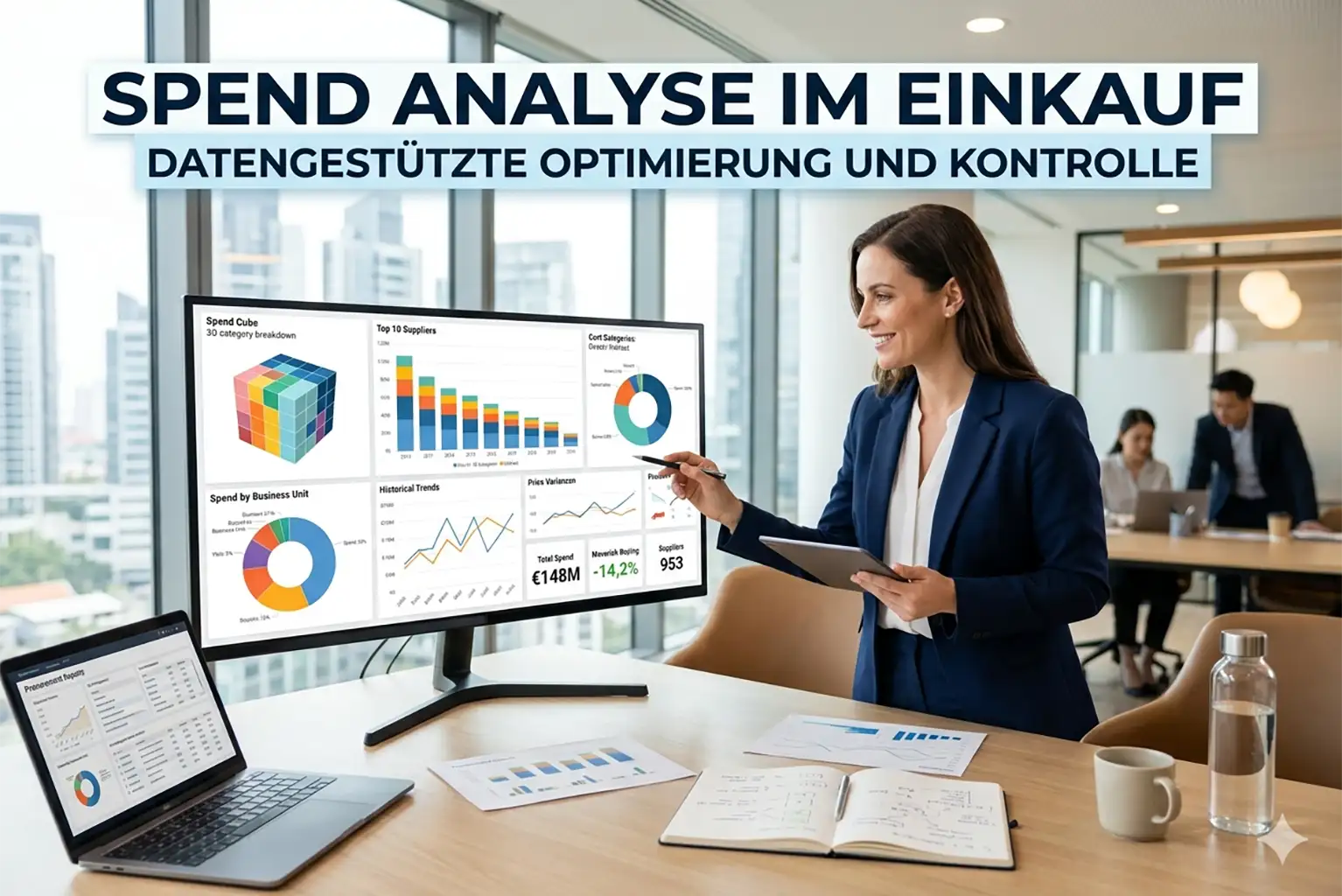
To understand the definition in detail, professionals examine the so-called „Spend Cube“:
The three dimensions of expenditure transparency
- Who is buying? Analysis by business units, locations, departments, or cost centres.
- What is being purchased? Assignment to product groups, item categories, or specific services.
- Who is being bought from? Identification of suppliers, group structures and distributors.
Key differentiations for experts
A profound analysis further distinguishes between the following categories:
- Direct vs. Indirect Spend: While Direct Spend includes materials that go directly into the end product (raw materials), Indirect Spend (MRO – Maintenance, Repair, Operations) refers to everything that sustains business operations (IT, facility management, marketing).
- Addressable volume: Not all expenditure is negotiable (e.g. taxes, rent). The analysis focuses on the addressable volume where procurement can generate real value through strategic levers.
- Header vs. Line-Item Data: Professionals go beyond header data (who got how much money?) and analyse line-item data (item level). This is the only way to uncover price variances for identical items – for example, if different locations purchase the same laptop at different prices.
„Those who do not master numbers will ultimately be mastered by numbers.“
2. Strategic Relevance: Why Data is the New Currency in Procurement
In a volatile global economy, spend analysis is the foundation for resilience and profitability. It transforms procurement from a mere „order processor“ into a strategic business partner:
- Bundling From Demand: By identifying identical needs across different locations, volumes can be consolidated and economies of scale can be exploited.
- Compliance & Maverick Buying: The analysis immediately reveals when purchases are made outside of framework agreements. This reduces costs and minimises legal risks.
- Supplier managementYou recognise single-supplier risks (dependency on one supplier) and can specifically optimise or diversify your supplier base.
3. The Process: 5 Phases to the „Single Source of Truth“
A structured data process is crucial to avoid the „garbage in, garbage out“ effect.
- Data extraction: Consolidating data from heterogeneous sources (ERP systems such as SAP/Oracle, accounting, credit card files).
- Data Cleansing: Harmonising supplier names (e.g. „Daimler AG“ and „Daimler Truck“ as a single entity) and correcting booking errors.
- Classification: Assignment of each transaction to a standardised taxonomy (e.g. eCl@ss, UNSPSC) or a company-specific material group hierarchy.
- Data enrichment: Supplementing internal data with external information such as supplier credit ratings or ESG scores (sustainability).
- Analysis & Reporting: Visualisation in dashboards to highlight deviations, savings potential and strategic fields of action.
Would you like a brief consultation on this?


4. Methodological Expertise: ABC Analysis, Kraljic Matrix, and Tail Spend
To translate the data flood into strategy, purchasing uses established frameworks:
The ABC Analysis (Pareto Principle)
She classifies expenditure by its value share. Mostly, 20 % of the suppliers account for 80 % of the spend (A-suppliers). Spend analysis helps to focus the procurement department's scarce resources on these key suppliers.
The Kraljic Matrix
Expenses are weighted here according to „supply risk“ and „impact on results“. The analysis provides the hard facts to divide product groups into strategic, leverage, bottleneck, or non-critical products.
Tail Spend Management
The analysis of „C-materials“ (many small purchases from many suppliers) is often the biggest goldmine. Although these usually represent only 20 % of the volume, they account for 80 % of the process costs. The goal here is radical consolidation.
5. Deep Dive: AI Classification and Predictive Spend Analytics
We are transitioning from descriptive to predictive analytics.
Automated AI classification
Modern algorithms use Natural Language Processing (NLP) to automatically assign free-text orders to product groups. Manual classification of 50,000 data records would take weeks; AI completed in minutes with a success rate of over 95 %.
Predictive Analytics & Market signals
Advanced tools link your internal spend with external market data (e.g. commodity indices). If the price of aluminium rises, the system proactively warns the buyer of upcoming budget overruns in relevant commodity groups.
6. Practical Example: Cost Optimisation through Bundling Effects
A medium-sized mechanical engineering company with five locations in Europe serves as a classic example:
- Status Quo: Each site procured Personal Protective Equipment (PPE) from local dealers. There were 28 different suppliers for gloves and helmets.
- Analysis result: The spend analysis revealed price differences of up to 40 % for identical branded items between locations.
- Measure: Central purchasing consolidated the volume and concluded a Europe-wide framework agreement with two core suppliers.
- Result: Direct cost savings of 18 % and a massive reduction in processing costs within accounts payable.
7. Best Practices for Sustainable Spending Analysis
To ensure your analysis is not a one-off project, you should consider the following points:
- Establish a data culture: Cleanliness starts with data entry in the ERP.
- Avoid „Excel hell“: use BI tools or specialised spend analytics software.
- Focus on the „addressable“: don't waste time on fixed costs that you can't influence in the short term.
- Involve stakeholders: Share your insights with departmental units to gain acceptance for central processes.
8. Conclusion on the strategic importance of spend analysis
The Spend Analysis is far more than simply backward-looking cost control. It is the foundation for every professional negotiation, every modern risk management strategy, and sustainable ESG Strategy in Procurement. Those who master their numbers negotiate on equal terms and secure the company's future viability in a complex market environment.
In the long term, this data-driven approach enables procurement to evolve from an administrative fulfilment assistant into a true business partner on equal footing with management. Only those who understand the status quo of their spending in meticulous detail can successfully lead the transformation towards a resilient and value-adding supply chain.
„Savings don't start with negotiation, but with understanding your own data.“
9. FAQ on Spend Analysis in Procurement
What is the difference between spend analysis and spend management?
Spend analysis is the data-based examination of the current situation. Spend management, on the other hand, encompasses the entire strategic process from analysis and sourcing to payment (procure-to-pay).
How deep must the data be for a good analysis?
Line-item data (item level) is essential for strategic decisions. Header data (invoice amount) is often only sufficient to recognize broad trends, but not for detailed price comparisons.
Is a spend analysis sensible for SMEs with a low budget?
Absolutely. Since SMEs often have less standardised processes, the potential for relative savings here is often even greater than in large corporations. Starting with simple BI tools is often very effective.
How does a spend analysis help with the Supply Chain Due Diligence Act (LkSG)?
By classifying and identifying all suppliers, it forms the necessary basis for risk management. Without a complete list of your suppliers, you cannot carry out an ESG risk analysis.