

Cost optimisation in the furniture industry: C+P Möbelsysteme GmbH & Co. KG
C + P Möbelsysteme is among the market-leading furniture manufacturers in Europe. Through continuous innovation, steady investment, and market-driven products, C + P stands for quality and expertise. With three sites in Germany and Poland, the company, founded in 1925, employs 700 people.
Optimization measures, including:
- Price improvements in all major product groups from C + P
- Optimisation and standardisation of payment terms
- Staff training and ensuring the sustainability of achieved savings
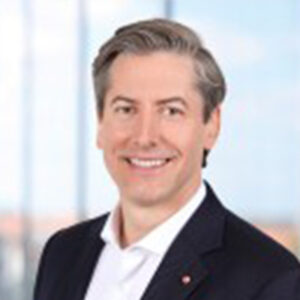
Interview with Uwe Hainbach, Managing Director of C + P Möbelsysteme GmbH & Co. KG.
Were you sceptical or more open-minded at the start of the project?
Uwe Hainbach: At the start of the project, I was curious. On the one hand, I was interested in where we stood with our purchasing. And on the other hand, I was interested in the know-how that would be imparted. Particularly through the qualification of the employees.
What were the main challenges at the beginning of the project?
Uwe Hainbach: For one thing, it was necessary to convince our employees of the project, which we quickly succeeded in doing. The employees quickly realised that they were not being scrutinised, but were being personally supported and relieved of burdens. The other major challenge was to create a clear dataset. To understand this, you need to know that we develop many customer-specific special solutions. For example, it is quite common for us to order unique quantities of a product only once.
To what extent has the optimisation project affected your security of supply and the quality of your products?
Uwe Hainbach: There were no disruptions.
How does optimisation have a sustainable impact on your daily operations?
Uwe Hainbach: For example, sustainability is reflected in our buyers being included in negotiations. This trained them, for instance, in negotiation strategies when procuring parts that aren't constantly a focus for the purchasing department. This still helps them in their day-to-day business. Our employees have also gained confidence in negotiations through such procurement tasks.
The Kloepfel project team works collaboratively.
Uwe Hainbach: Partnership-driven, highly systematic, driven/results-oriented and transparent. I'd like to elaborate on the last point. Through the transparent weekly reporting and open communication, every step taken by the Kloepfel team was understandable to us; ultimately, we had full control.
Common project successes are also always dependent on the people involved. We talk about being temporary colleagues on projects. How did you feel about that?
Uwe Hainbach: The team was very pleasant to work with and integrated into the company as partners. They quickly developed a feel for what was achievable in negotiations and savings, and where the limits lay.
Some suppliers had to get used to seeing new Kloepfel faces at the negotiating table, alongside your company's familiar contacts. How did you experience these situations and what were the suppliers' reactions?
Uwe Hainbach: The suppliers were not alienated and took the optimisation project well.
What is your conclusion after the project has ended?
Uwe Hainbach: Our entire procurement process was professionally scrutinised, resulting in widespread significant savings. I can highly recommend Kloepfel Consulting at any time.
Thank you very much for the interview!