

WINI Office Furniture Georg Schmidt GmbH & Co. KG.
Branch Office furniture
Products Desks, storage solutions, reception, conference equipment, partition walls, lounge furniture, room acoustics
Staff 220
Revenue €35 million
Optimization measures, including:
- Tender notices and supplier days
- Workshops with existing suppliers to identify jointly realisable savings potential Value analyses
- Identification and qualification of alternative suppliers
Topics covered:
- Logistics, C-parts, drive technology, wood-based materials, external services (assembly, contract manufacturing, etc.), locks, material & overheads, purchased metal parts
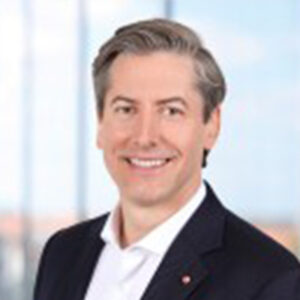
Interview with Rudolf Bandick, Commercial Managing Director of WINI Büromöbel Georg Schmidt GmbH & Co. KG.
Were you sceptical or more open-minded at the start of the project?
Rudolf Bandick: I was curious at the start of the project. On the one hand, I wondered what deficits in our work would be uncovered. But on the other hand, I was also hopeful about the expertise that would be imparted. Especially through the use of the Cost Control software. Put simply, this should help us to analyse what the suppliers' true product costs are so that we can confront them with them in negotiations.
What were the main challenges at the beginning of the project?
Rudolf Bandick: The big challenge was to create a reasonable data basis. It is important to know that we develop many customised special solutions. For example, it is not uncommon for us to only order one-off quantities of a product. In this case, it is not possible to optimise processes across the board.
To what extent has the optimisation project affected your security of supply and the quality of your products?
Rudolf Bandick: There were no disruptions. The suppliers were not put off and took the optimisation project in their stride.
How does optimisation have a sustainable impact on your daily operations?
Rudolf Bandick: You have to take a differentiated view. Some savings only lasted for several months, as the relevant markets are constantly in flux. Other savings, on the other hand, will certainly last for several years. What was certainly good about the project was that our buyers were included in the negotiations. For example, they learnt about argumentation chains, which still helps them in their day-to-day business today.
Konzentriert, effizient, lösungsorientiert
Rudolf Bandick: Very systematic, highly IT-efficient and very target/results-orientated.
Common project successes are also always dependent on the people involved. We talk about being temporary colleagues on projects. How did you feel about that?
Rudolf Bandick: The team was human and quickly got to grips with the company. They quickly developed a sense of what was feasible in negotiations and savings and where the limits were. However, you also realised that the team was under a certain amount of pressure from the head office to achieve the best possible result. This is where the idea of performance made itself felt due to the performance-related remuneration.
Some suppliers had to get used to seeing new Kloepfel faces at the negotiating table, alongside your company's familiar contacts. How did you experience these situations and what were the suppliers' reactions? There were certain cultural differences between the sales representatives, the suppliers and the Kloepfel teams. For example, the consultants had an academic degree and were usually younger than the sales representatives, some of whom had over 30 years of experience. This sometimes led to initial reflexes of defiance and scepticism, but these usually gave way to appropriate respect.
What is your conclusion after the project has ended?
Rudolf Bandick: Our entire procurement process was professionally scrutinised and significant savings were made across the board. In addition, various conveniences and taboos were „aired out“, which is always easier to do under the watchful eye of others.
Thank you very much for the interview!