

Forsa study: 37 percent of automakers are opening up new markets
The German automotive industry is under heavy pressure. To secure its traditional business, many companies are looking for new revenue sources – especially in the defense industry. However, compared to other industrial sectors, the sector is still lagging behind in its transformation. While many companies are growing through acquisitions and want to keep their German plants, lack of funding, strict regulations, and outdated distribution structures are slowing down the pace.
Figures and facts from the study:
- Need for catching up: 37 percent of automotive companies are expanding into new business areas (total industry: 45 percent); 63 percent are continuing as before.
- Armament trend: 31 percent are already active in the defense business; another 20 percent are preparing to get started.
- Acquisitions and closures: 27 percent grow through company acquisitions; almost every tenth company (9 percent) closes entire divisions due to a lack of buyers.
- Tumbling in China: 16 percent open their own plants for Chinese partners – just as many (16 percent) are already losing orders to competitors from Far East Europe.
New business fields and armaments as hope generators
According to the press release, 37 percent of the German automotive companies surveyed have either launched initial pilot projects or already established new business areas. Thus, the sector is below the average for the entire manufacturing industry (45 percent). Almost two-thirds (63 percent) even rely entirely on their traditional business model. According to FTI-Andersch, this is mainly due to customers and sales teams that stick to the familiar routines (52 percent), strict safety and regulatory requirements (50 percent), and a lack of investment capital (22 percent). However, those who have made the move expect significant revenue growth by 2030.
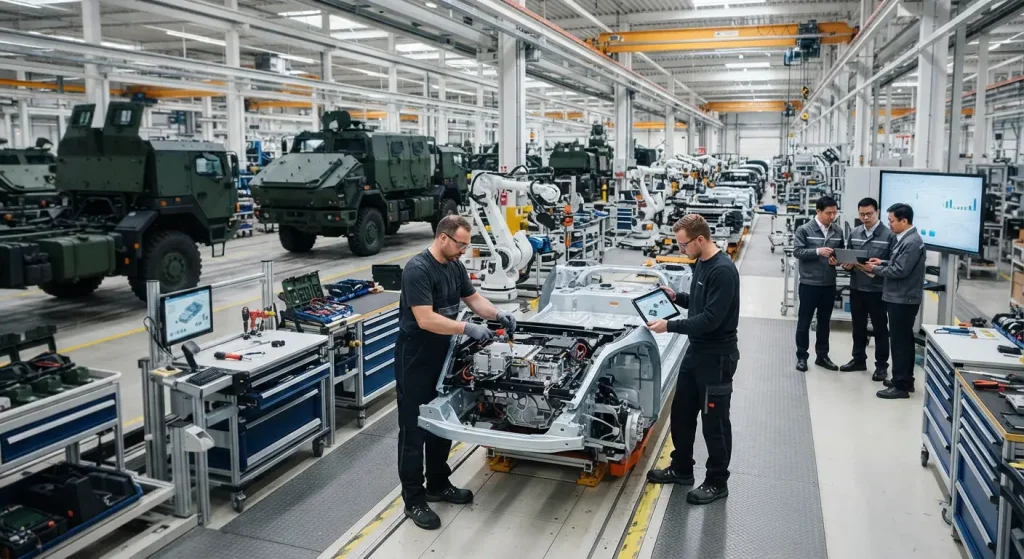
At the top of the list is the defense sector. According to the press release, 31 percent of companies in the defense market are already active, and another 20 percent plan to enter the market. Almost half of the active companies are already generating regular revenue in this sector. Nevertheless, many hesitate due to uncertain demand and political dependencies (52 percent). FTI-Andersch partner Heiko Rauscher warns against false expectations: Those who are prepared for mass production encounter small quantities and rigid procurement procedures in the defense industry.
Location in Germany: Plants remain, individual divisions disappear
Production in Germany shows a divided picture. According to the study results, automakers are holding back significantly on new factories or investments in artificial intelligence in Germany. At the same time, hardly anyone questions the existing locations: 56 percent even expect more employees in Germany by mid-2027.
Instead, many are gaining growth from the outside. According to the survey, 27 percent have purchased other companies or business units or are planning to do so in the near future. On the other hand, almost one in ten companies (nine percent) are divesting unprofitable areas without selling them and closing them completely.
China remains both a partner and a rival at the same time
The relationship with China is also changing. While around a third of the companies active there feel that China is losing importance as a sales market, others are deliberately seeking closer ties: according to the press release, 16 percent have opened their own production capacities for Chinese partners since the beginning of 2025.
At the same time, competition in the European market is becoming more fierce. Similarly, 16 percent of companies in Europe have already lost contracts to Chinese suppliers. Nevertheless, 72 percent of the managers surveyed believe that they remain superior to the competition from China. Therefore, experts advise carefully weighing up the following questions: Where can partnerships help with utilization – and where must technology and know-how be protected?