




The most important thing first
The Optimisation of indirect procurement offers companies untapped Potential for savings from 10 %to 25 %. While direct procurement is usually already efficiently managed, massive process costs can be reduced and compliance increased here through digital catalogues, the bundling of „tail spend“ and automated processes.
Key facts for optimization
- Core focus: Reducing process complexity for non-production materials.
- Key outcome: Fewer suppliers and faster turnaround times through automation.
- Most important tool: E-procurement systems for „guided buying“.
- Trend 2026: Integration of ESG Criteria directly in the order process.
1. Definition: Indirect Purchasing
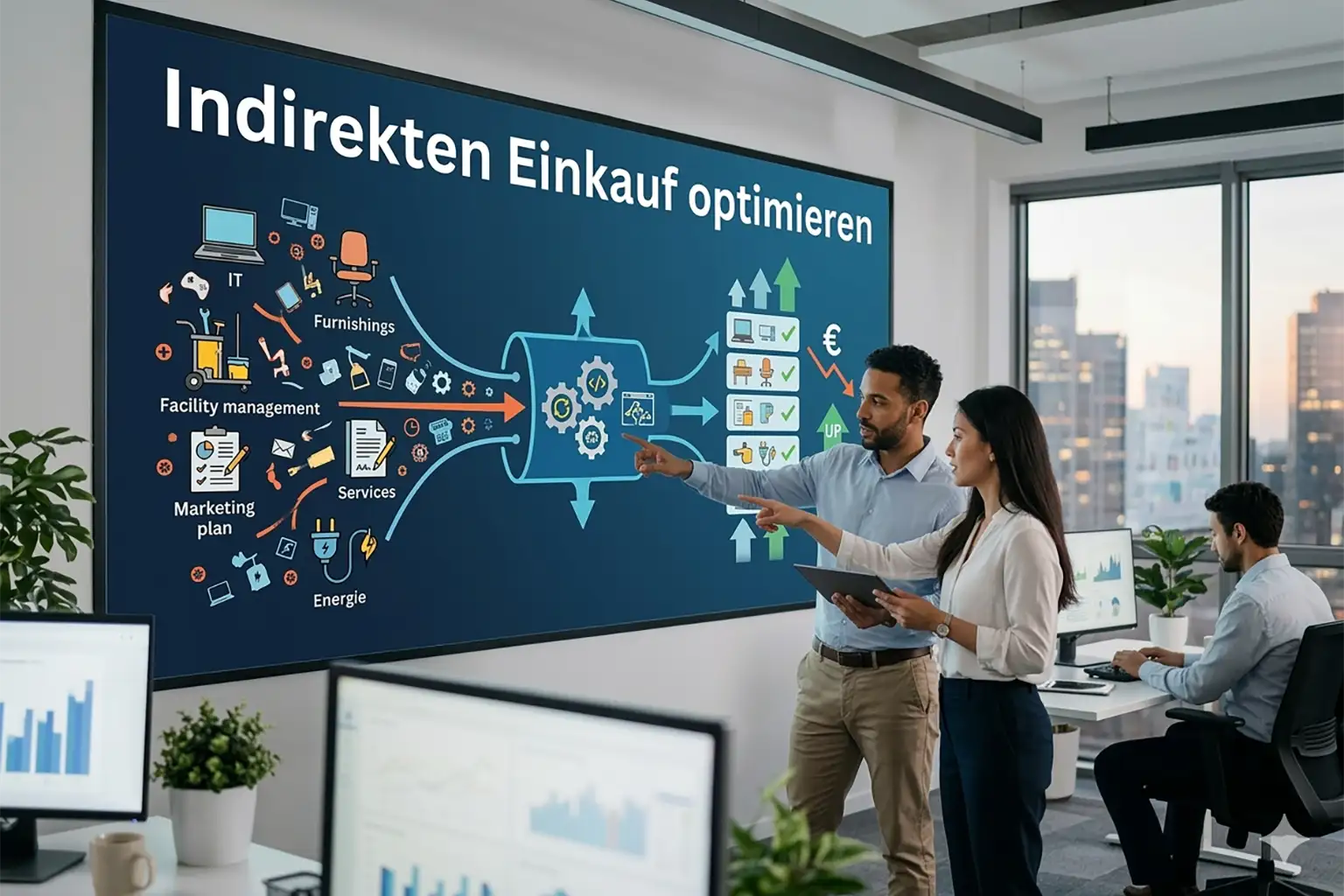
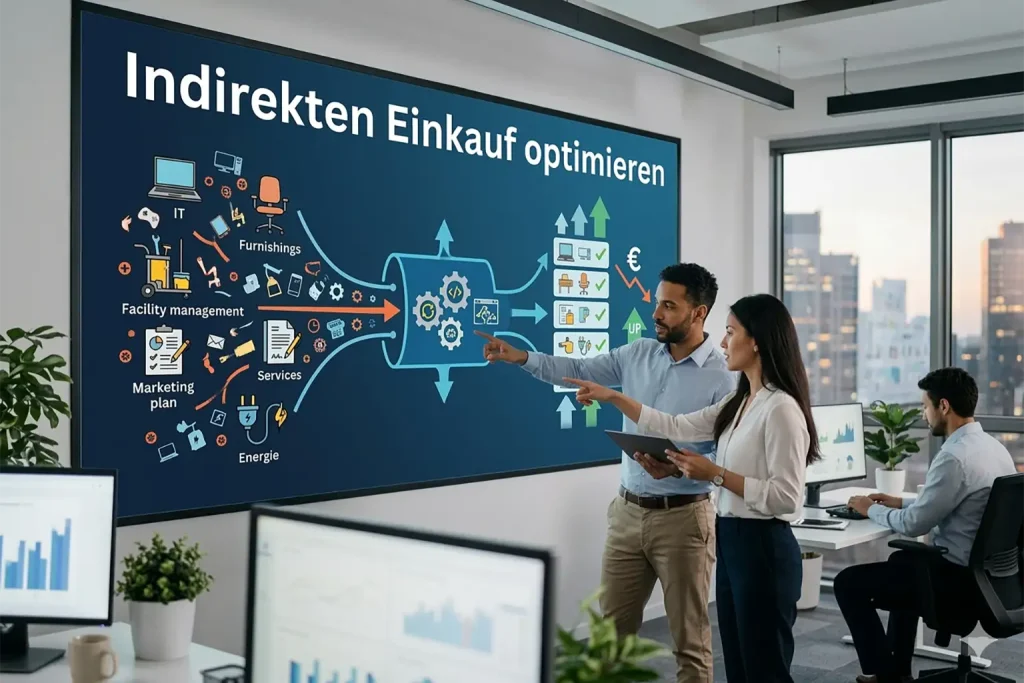
While direct procurement sources raw materials for manufacturing, indirect procurement ensures the necessary infrastructure. Typical product groups are:
- IT & Telecommunications: Hardware, Software Licences, Cloud Services.
- Facility Management: Cleaning, Energy, Building Maintenance.
- MRO-Bedarf: Maintenance, Repair and Operations (e.g. tools, lubricants).
- Professional Services: Consulting services, marketing agencies, temporary work.
2. Why indirect procurement is often a „blind spot“
Many companies focus on large production costs. The indirect area is often handled „on the side,“ which has fatal consequences for the margin: the administrative costs for a €50 order are often just as high as for a €5,000 order.
„Efficiency isn't about doing more things, but about leaving out the unnecessary ones.“
Without a targeted strategy, enormous costs arise from thousands of small invoices and uncontrolled proliferation of suppliers.
3. The 5 most effective strategies for greater efficiency
- Bundling volumes: Aggregate demand across different locations.
- Supplier consolidation: Massively reduce the number of creditors to lower accounting expenses.
- Category Management: Create clear expert responsibilities for complex categories such as „Marketing“ or „IT“.
- Standardisation: Limit the selection to defined standard articles.
- Framework agreements: Negotiate long-term conditions for recurring services.
Would you like a brief consultation on this?


4. Deep Dive: Tail Spend & Technology Choice
Ein tiefer Blick in die Daten zeigt: 80 % der Lieferanten verursachen oft nur 20 % des Einkaufsvolumens – das ist der sogenannte Tail Spend. Dieser Bereich bindet überproportional viel Zeit.
In 2026, specialised best-of-breed solutions will gain ground over rigid ERP modules. While ERP systems are often technically complex, modern cloud platforms offer an „Amazon-like“ shopping experience. This increases user adoption and allows buyers to free up time for strategic negotiations instead of manually processing small orders.
5. ESG & Sustainability: The New Standard 2026
Sustainability is a core task of purchasing today. The indirect area accounts for a large proportion of scope 3 emissions. A modern process integrates ESG criteria directly into supplier selection. Those who optimise today favour suppliers with a certified carbon footprint, thereby actively promoting the company's climate goals.
6. Change Management: Why Technology Alone Isn't Enough
Software alone does not solve problems. Optimisation always means a change in how people work. Employees must understand that the new processes are not about increased control, but about easing their workload. A smooth rollout is only successful if the user-friendliness of the new tools is paramount.
7. The 5-Step Roadmap for Implementation
- Spend Analysis: Identify the biggest cost drivers and supplier clusters.
- Strategy Check: Define quick wins (e.g. office supplies or IT hardware).
- Tool selection: Choose a mobile-friendly solution with intuitive „Guided Buying“.
- Pilot phase: Test the process with one department and fixed catalogues.
- Roll-out & Monitoring: Scale the solution and measure the reduction in process costs.
8. Practical Example: Efficiency Improvement in Small and Medium-sized Enterprises
A service company with 800 employees had over 500 suppliers for indirect goods.
- Each department ordered decentrally; accounting was overwhelmed with manual invoice verification.
- Solution: Introduction of a central portal and reduction to 5 core suppliers.
- Result: Process costs per order fell from €115 to €22. The total annual savings were over €400,000.
9. Conclusion: Optimising Indirect Procurement Sustainably
The professionalisation of procurement is a crucial competitive advantage. Those who optimise indirect procurement must see process costs as a strategic factor. Digital tools and consistent bundling will help you regain liquidity and time.
„Transparency is the foundation upon which all effective decisions grow.“
In 2026, digitalised indirect procurement will no longer be optional, but the basis for a future-proof company.
10. FAQ: Optimise indirect procurement – your questions answered
What are the biggest hurdles in optimisation?
They generally lie in data quality and employee acceptance. A thorough analysis of current spending is the most important preparatory work.
What potential for savings in process costs is realistic?
By automating and using e-procurement, the costs per ordering process can often be reduced by up to 70 % when you optimise indirect purchasing.
Wie unterstützt KI den indirekten Einkauf?
Today, AI tools can automatically classify outputs, detect anomalies in invoices, and even perform real-time price comparisons across hundreds of platforms.
Is an Excel spreadsheet enough to start with?
For the initial analysis, yes. However, for sustainable optimisation of indirect procurement, specialised software is ultimately essential due to process automation and audit security.