




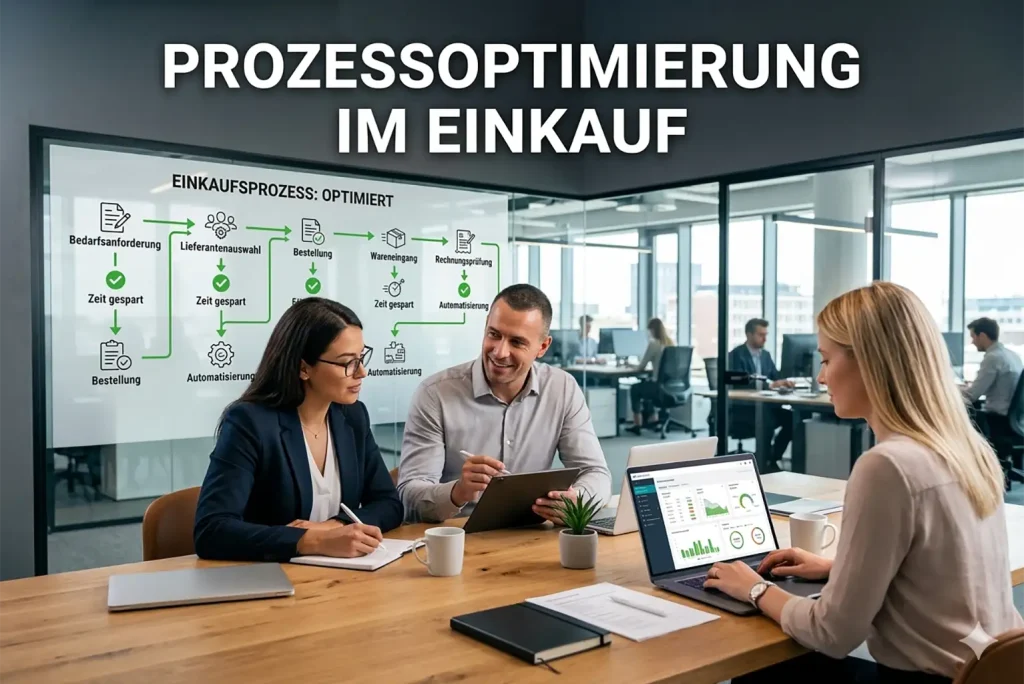
Most importantly, first of all:
The Process optimisation in procurement is the key lever in 2026 to reduce operating costs by up to 30 % and massively increase supply chain security. Through the consistent transformation of manual, error-prone processes towards AI-supported workflows, procurement will evolve from an administrative handler to a strategic value creation partner. Those who do not embrace automation today will lose essential competitive advantages in a volatile market environment.
Key Facts on Process Optimisation
- Core objective: Drastically increase efficiency by reducing transaction costs and eliminating Maverick Buying.
- Methodology: In-depth process analysis using modern process mining, followed by radical standardisation and AI automation.
- Technology: Use of cloud-based e-procurement systems, RPA bots for routine tasks and autonomous AI sourcing agents.
- Benchmark 2026: A „touchless rate“ of over 70 % for indirect requirements is considered the minimum standard for market-leading companies today.
1. Definition of process optimisation in procurement
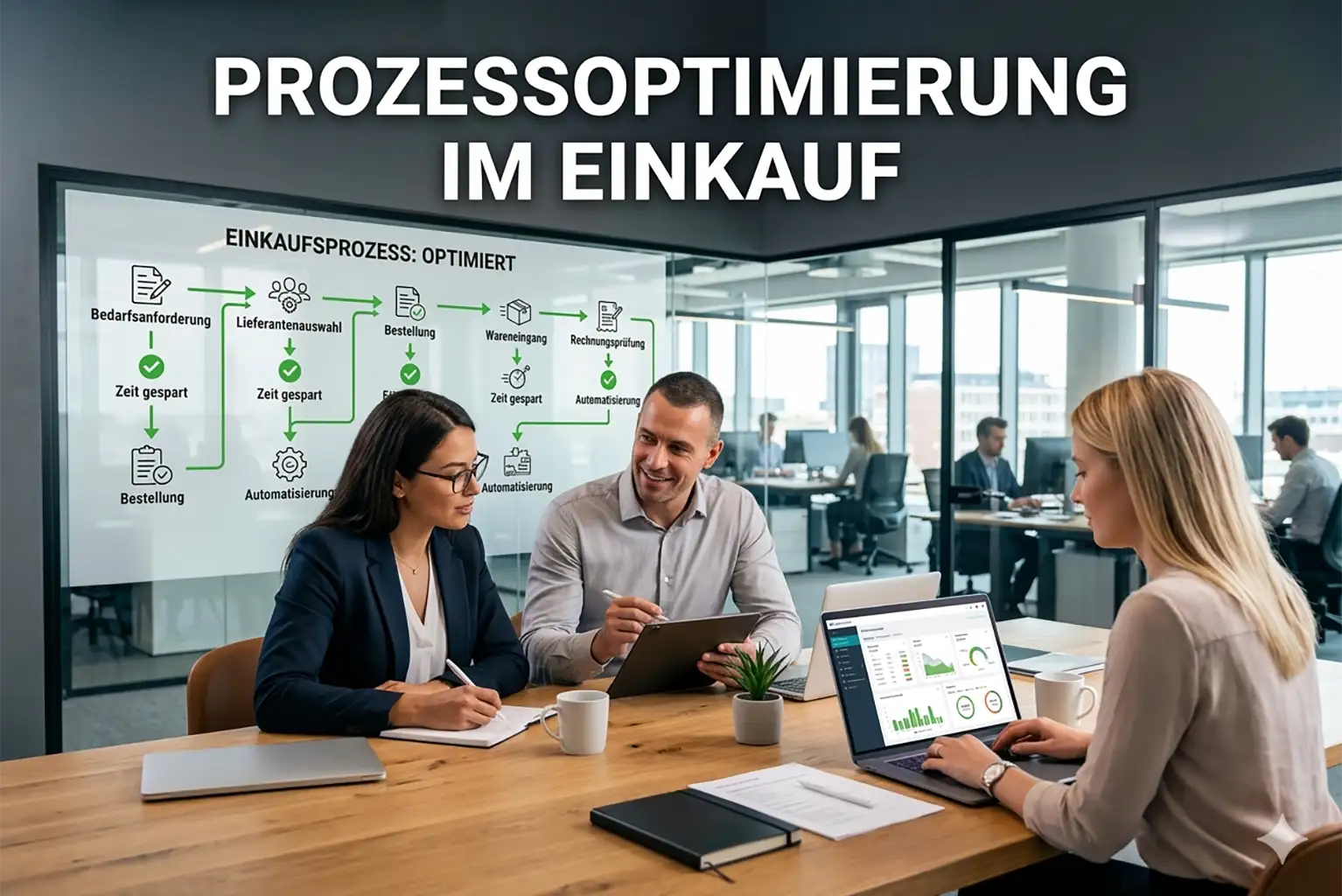
„He who digitises a bad process, will ultimately only have a bad digital process.“
At its core, optimisation focuses on the following pillars:
- Lead times: The drastic reduction of the time from initial internal requirement to final payment.
- Transaction costs: Minimising the administrative effort per order to reduce fixed costs per transaction.
- Error Prevention: The elimination of manual data transfers and media breaks, which often lead to incorrect orders.
- Value creation: The freeing up of expert capacity so that buyers can focus on complex supplier developments.
2. Why optimisation is critical today
In the current market landscape of 2026, procurement is under unprecedented pressure to adapt. A purely operational approach is no longer sufficient to overcome global crises and regulatory hurdles. A professional process landscape is now a prerequisite for safeguarding the company's existence.
The key drivers for this change are:
- Maintaining margins: In times of rising raw material prices, manual processes are an unnecessary cost factor. A manual order often costs more than the actual goods today.
- Compliance & ESGWithout digital processes, fulfilling legal reporting obligations such as the Supply Chain Due Diligence Act (LkSG) is simply not legally viable.
- War for Talents: Highly qualified buyers demand modern, digital tools. Outdated processes deter talent and tie up specialists in monotonous, diligent tasks.
3. The 5 Phases of Process Optimisation
Successful optimisation projects do not follow a random principle, but a tried-and-tested, phase-oriented model. It is important here to recognise that the technological solution should only be implemented at the end of organisational groundwork.
A structured project typically goes through these steps:
- Current state analysis: Using digital tools such as process mining, bottlenecks and inefficient „workarounds“ are made objectively visible in real-time.
- Harmonisation: Cleaning up supplier master data and unifying product group structures create the basis for comparability.
- Target design: The definition of lean, digital workflows ensures clear responsibilities and automated approval processes.
- Implementation: The introduction of modern tools such as e-procurement platforms translates theory into daily practice.
- Continuous Improvement (CI): Establishing a monitoring system ensures that processes do not revert to old patterns.
Would you like a brief consultation on this?


4. Technology as an Enabler: AI & Automation
Technology acts as the crucial accelerator for process optimisation in 2026. While simple scripts were once sufficient, learning systems now handle complex tasks that previously required human intuition.
The most important technological drivers are:
- E-Procurement & Guided Buying: Intelligent interfaces intuitively guide employees to the right articles, thus preventing expensive incorrect purchases.
- RPA (Robotic Process Automation): Software robots reliably match orders, delivery notes, and invoices around the clock.
- Predictive Sourcing: Advanced data analysis identifies demand patterns early and triggers automatic stock notifications.
- Smart Contracts: Automated payment processing upon receipt of goods accelerates cash flow and improves supplier relationships.
5. Deep Dive: Autonomous Procurement & AI Agents
Autonomous procurement is a technological milestone in process optimisation in purchasing. Here, we are moving away from classic rule automation and entering the era of decision-capable systems, which are particularly important in the area of procurement. C-parts procurement bring enormous relief.
The detailed technical process:
AI agents continuously monitor stock levels or receive unstructured demand requirements. They immediately reconcile these with existing framework agreements. If no contract exists, the AI conducts independent market research, obtains quotations and evaluates them according to price, delivery time and ESG criteria. For small amounts, the purchase is completed autonomously, with human intervention only required for strategically relevant deviations („management by exception“).
6. practical example: transformation in the SME sector
To make the theoretical advantages tangible, it is worth looking at a real-world industrial scenario. A classic mechanical engineering company with 500 employees faced the challenge that its purchasing team was bogged down in operational minutiae and had no time for strategic negotiations.
The starting situation and solution:
With a Maverick Buying quote of 45% and process costs of €95 per order, the system was inefficient. The introduction of a cloud solution and the consistent connection of top suppliers via EDI enabled a radical simplification of the process. Approval workflows were fully automated up to a value of €500.
The measurable successes:
After just 12 months, the Maverick Buying rate dropped below 5 %, while process costs per order fell to €28. The team used the time saved to complete two strategic sourcing projects, delivering an additional six-figure saving for the company.
7. Key Performance Indicators at a Glance
Without measurable data, all optimisation remains a subjective experiment. To objectively manage the progress of process optimisation in procurement, key performance indicators must be defined that reflect the entire process lifecycle.
The most important control variables are:
- Automation Rate: The percentage of „touchless“ orders that proceed without manual intervention from procurement.
- Cost per PO (Kosten pro Bestellung): A calculation of the total administrative expenses in relation to the transaction volume.
- Maverick Buying Quote: The proportion of purchases made recklessly or unknowingly outside the official purchasing process.
- Supplier Lead Time: The time period from order submission to the physical receipt of goods in the warehouse.
8. Avoiding common pitfalls
Despite state-of-the-art software, optimisation projects often fail due to human or organisational factors. Those who recognise the typical sources of error can take proactive countermeasures and increase investment security.
„You can only manage what you can measure.“
Please pay particular attention to the following risks:
- Tool focus before process logic: The assumption that new software will „fix“ an unstructured process is the most common mistake. Logic must be in place before code.
- Missing Change Management: If the workforce doesn't understand the benefits of the new digital methods, they'll immediately look for new workarounds.
- Deficient data hygiene: Automation and AI rely on high-quality master data. Outdated catalogue prices inevitably lead to the interruption of automated chains.
9. Conclusion: Strategic Advantages through Procurement Process Optimisation
The Process optimisation in procurement In 2026, it will no longer be a purely operational task, but a strategic necessity for modern businesses to survive. By radically streamlining and digitalising processes, you will not only secure your returns but also gain the necessary agility for a volatile global market. Procurement will finally transform from an administrative function to a data-driven value driver that actively strengthens the innovation capabilities of the entire company.
10. FAQ: Frequently Asked Questions about Procurement Process Optimisation
What specific cost-saving potential does process optimisation in purchasing offer?
In practice, administrative process costs can be reduced by 20 % to 40 % through consistent automation. At the same time, procurement prices fall due to better bundling of requirements and higher contract compliance.
What is the most important first step in planned optimisation?
Create radical transparency. A detailed analysis of current data („Spend Analysis“) immediately reveals where Maverick Buying and inefficient approval loops are burning the most money.
Is process optimisation in purchasing worthwhile for smaller businesses too?
Absolutely. Thanks to modular Software-as-a-Service (SaaS) solutions, SMEs too can now benefit from automated workflows without high IT investments. The return on investment (ROI) here is often less than a year.
Will artificial intelligence replace the strategic buyer in the future?
No. The AI takes over repetitive data analysis and the handling of standard requirements. This makes the strategic buyer more important than ever as a relationship manager, negotiation expert for complex projects, and architect of the supply chain.