




First and foremost:
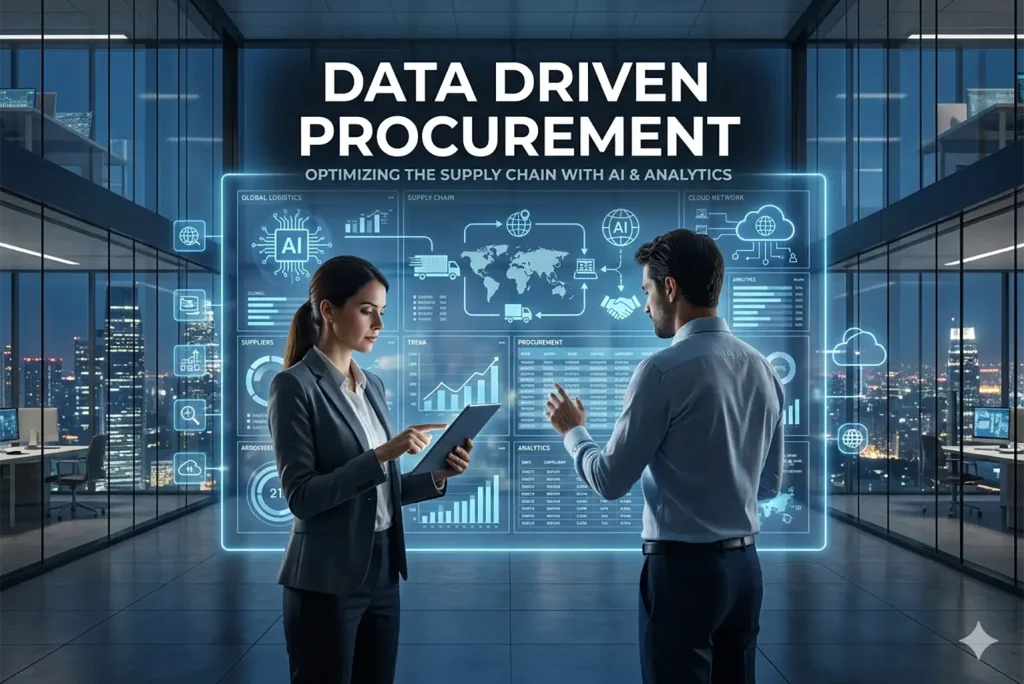
Data Driven Procurement is the foundation for a future-proof supply chain. The use of Artificial intelligence (AI) in purchasing enables significant increases in efficiency, cost reductions and a proactive Risk management. However, success depends critically on data quality: Only clean, structured and centralised data allows AI algorithms to create precise forecasts and control operational processes autonomously.
Key facts about data-driven procurement
- Core objective: Transformation from reactive ordering to proactive, value-adding management.
- AI levers: automation of routine tasks, predictive analyses (prices/demand) and real-time risk monitoring.
- Prerequisite: „Clean data“ - harmonisation of master data across ERP systems.
- ESG factor: Data-driven fulfilment of supply chain laws (LkSG) and CO2 reporting.
- ROI potential: Reduction of process costs by up to 30 % and significant optimisation of spend compliance.
1 Definition: What is Data Driven Procurement?
While traditional procurement often only uses data for documentation purposes (retrospectively), the data-driven approach uses technologies such as big data and AI to generate real-time insights and future forecasts. It transforms procurement from a pure cost unit into a strategic value creation partner.
2. the change: from intuition to data strategy
In the past, purchasing often relied on many years of experience and a certain „gut feeling“. In a globally networked and highly volatile world, this is no longer enough. Today, every decision - from supplier onboarding to complex price negotiations - must be based on valid data.
AI acts as a catalyst here. It can analyse huge amounts of data in fractions of a second, which would be physically impossible for human teams. The aim is a „cognitive procurement“ approach in which the system not only provides data, but also proactively makes strategic recommendations for action.
„Without valid data, any strategy in purchasing is just a guess.“
3. data quality: the fuel for AI in procurement
The irrefutable principle applies: garbage in, garbage out. An AI is only as intelligent as the data it is trained with. Without an optimised database, even the most expensive algorithms will deliver incorrect results.
The three pillars of data optimisation:
- Data cleansing: Elimination of duplicates and correction of incorrect data records in ERP and SRM systems.
- Harmonisation: Standardisation of product groups (e.g. according to eCl@ss) so that the AI recognises that different designations mean the same product.
- Data enrichment: Supplementing internal data with external sources such as credit rating indices, world market prices or ESG ratings.
Would you like a brief consultation on this?


4. practical use cases: Where AI makes the difference today
The theoretical basis of high-quality data is the necessary prerequisite, but the actual added value for the company only arises in the operational application. This is where artificial intelligence transforms from a silent analysis tool into an active strategic player that can optimise the entire business process through precise automation and intelligent forecasts. Procurement process revolutionised.
Automated spend management
AI algorithms classify expenditure automatically. This uncovers maverick buying (uncontrolled purchasing that bypasses central purchasing) and identifies bundling potential for better conditions.
Predictive Sourcing & Forecasting
AI makes precise predictions by analysing historical demand and market trends. The calculation of the optimum order time is often based on models such as the Andler formula, which is dynamically expanded by AI:
Optimal order quantity = square root of ((2 * annual requirement * fixed order costs) / (cost price * inventory cost rate))
AI recalculates the variables in real time if, for example, freight prices or interest rates change.
Risk management in real time
AI scans news, weather reports and political developments worldwide. If a strike in an important harbour or a delivery bottleneck is imminent, the system immediately sounds the alarm and proactively suggests alternative suppliers.
5. deep dive: the four stages of analytics maturity in procurement
In order to fully utilise data-driven procurement, companies usually go through a maturing process:
- Descriptive (What happened?): Retrospective transparency about expenditure and performance.
- Diagnostic (Why did it happen?): Identification of patterns and cost drivers (e.g. price vs. volume effects).
- Predictive (What will happen?): Prediction of price trends, requirements and delivery risks based on market signals.
- Prescriptive (What should we do?): The system provides concrete action scenarios and optimises decision-making autonomously.
6 ESG & Compliance: Why Data Driven Procurement is mandatory today
In 2026, procurement will no longer just be responsible for costs, but for sustainable transparency. Legal requirements such as the Supply Chain Due Diligence Act (LkSG) demand seamless data across the entire supply chain.
AI-supported systems enable automated emissions tracking and scan global news sources for violations of labour rights. This ensures audit readiness and protects the company from severe fines and reputational damage.
7 The technological basis: NLP, OCR and machine learning
AI uses three core technologies to implement data-driven procurement operationally:
- NLP (Natural Language Processing): Understands unstructured texts in contracts and automatically recognises clauses or risks.
- OCR (Optical Character Recognition): Digitises paper invoices and delivery notes without errors.
- Machine Learning (ML): Recognises anomalies (e.g. fraud attempts or price deviations) that would be overlooked in manual audits.
8th practical example: ROI increase through AI-supported spend analysis
A Medium-sized mechanical engineering company was struggling with a confusing supplier structure for C-parts. Due to inconsistent ERP entries, it was not clear that purchases were being made from over 15 dealers at different prices.
The solution: Automated data cleansing and AI classification identified all identical items. The system suggested bundling with just two core suppliers.
The result:
- Savings: 12 % Reduction in material costs through volume bundling.
- Process time: The manual effort for master data maintenance was reduced by 40 %.
- Transparency: The maverick buying rate was halved within six months.
9. implementation challenges
Despite the impressive potential, the transition to a fully automated, data-driven purchasing organisation is not just an IT project. The success of the transformation depends largely on how well the company bridges the gap between technological innovation, organisational structures and employee acceptance.
- Data silos: Information is often scattered across different departments or outdated legacy systems, which makes it difficult to analyse in a standardised way.
- Change management: Employees must learn to trust AI as a „digital colleague“ and develop their role from clerk to strategic data manager.
- Data quality: The initial effort required to cleanse historical data is often underestimated, but is essential for valid AI results.
- Data protection (GDPR): Legal framework conditions must be strictly adhered to, especially when exchanging data with external analysis partners.
„The most valuable resource of a modern buyer today is no longer just his budget, but the quality of his information.“
10 Conclusion: The future belongs to data-driven procurement
Data Driven Procurement is no longer an option, but a survival strategy. Companies that cleanse and structure their data today are laying the foundations for AI-supported value creation. It is no longer just about cost savings, but about resilience, speed and a real strategic competitive advantage in a digitalised market environment.
The technological changeover is primarily a cultural change: those who learn to recognise data as the most valuable asset will transform procurement from a reactive administrative body to a proactive driver of innovation in the long term. Only those who utilise the synergy of human expertise and machine precision will be able to master the complexity of modern supply chains with confidence. Those who invest in data quality today will secure their place as the market leader of tomorrow.
11 FAQ: Frequently asked questions about data-driven procurement and AI in purchasing
Do I have to replace my entire IT infrastructure?
No. Modern solutions for data-driven procurement can usually be layered on top of existing ERP systems (such as SAP or Microsoft Dynamics). The focus should initially be on clean data extraction and interface optimisation.
Will AI replace the strategic buyer?
On the contrary. AI takes on repetitive, administrative tasks. As a result, humans take on the role of strategists, negotiators and relationship managers who evaluate the insights provided by the AI.
When is the use of AI in purchasing worthwhile?
As soon as the number of transactions makes a manual analysis unmanageable. The systems often pay for themselves after just 12 to 18 months thanks to the potential savings identified and the massive reduction in process errors.
Which initial steps are important for getting started with data-driven procurement?
Start with a 'data audit' to check the status quo of your master data. Then select a narrowly defined pilot area (e.g. indirect expenditure) to quickly visualise the benefits and create acceptance within the team.