


TÜV organizations demand national and international security infrastructure
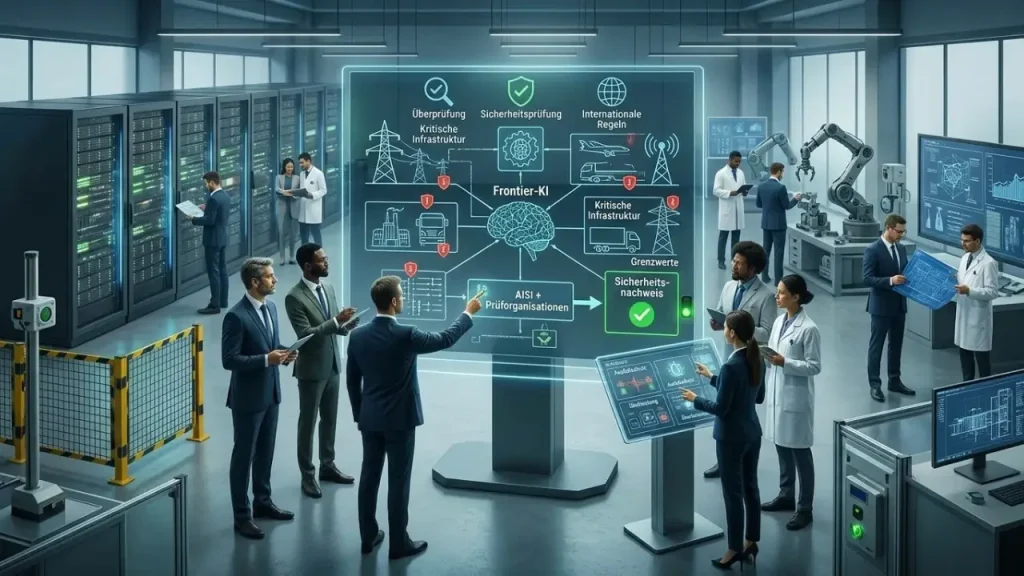
Before extremely powerful AI models hit the market, they should be tested for their safety by independent bodies. This is what the TÜV Association and the TÜV AI Lab are demanding. To preserve Europe’s digital sovereignty, the organizations propose using the German Institute for Artificial Intelligence (AISI) in partnership with independent testing organizations as a supervisory authority. Furthermore, global rules with clear limits are needed to address uncontrollable risks.
- Manufacturer specifications are not enough: security testing must not be left solely to the developers, especially not when critical infrastructure is connected to the systems.
- AISI as a central pillar: The German AI safety institute is to be expanded into a supervisory authority and work closely with the testing expertise from industry.
- Full insight for auditors: Independent experts need access to models, training data, and safeguards to test behavior under real-world conditions.
- International stop signals: A worldwide agreement is planned. If safety requirements are not met or risk thresholds are exceeded, the publication must be able to be stopped.
Why Europe must be able to independently evaluate foreign technologies
When using AI in sensitive areas, blind trust in manufacturers’ promises is not enough. Since a large proportion of the systems used will likely continue to come from non-EU countries such as the USA, Germany and Europe must be able to independently evaluate this software. True digital sovereignty does not simply mean developing our own systems; it also means independently examining and mastering foreign technologies, just as is the case with the approval of cars, industrial plants or medical devices.
State supervision and practical experience go hand in hand
To ensure rapid action, the TÜV Association and TÜV AI.Lab propose linking the German AI safety institute with established testing organizations. The idea behind it is that while the state supervision and final decision-making lie with the AISI, independent testers bring their in-depth knowledge from industries such as the automotive industry, energy supply, and mechanical engineering. This allows for a practical assessment of how an AI behaves when it assumes direct control over physical machines or sensitive infrastructure.
Global rules and a warning system for incidents
A national approach is too short-sighted for globally operating AI developers. Germany and the EU should therefore closely coordinate with partner countries such as Great Britain, Canada and Japan to work towards common approaches and testing standards. The ultimate goal is an internationally binding regulatory framework: If a model exceeds defined risk limits or lacks reliable safety evidence, market launch will be suspended. This should be complemented by global oversight and a