


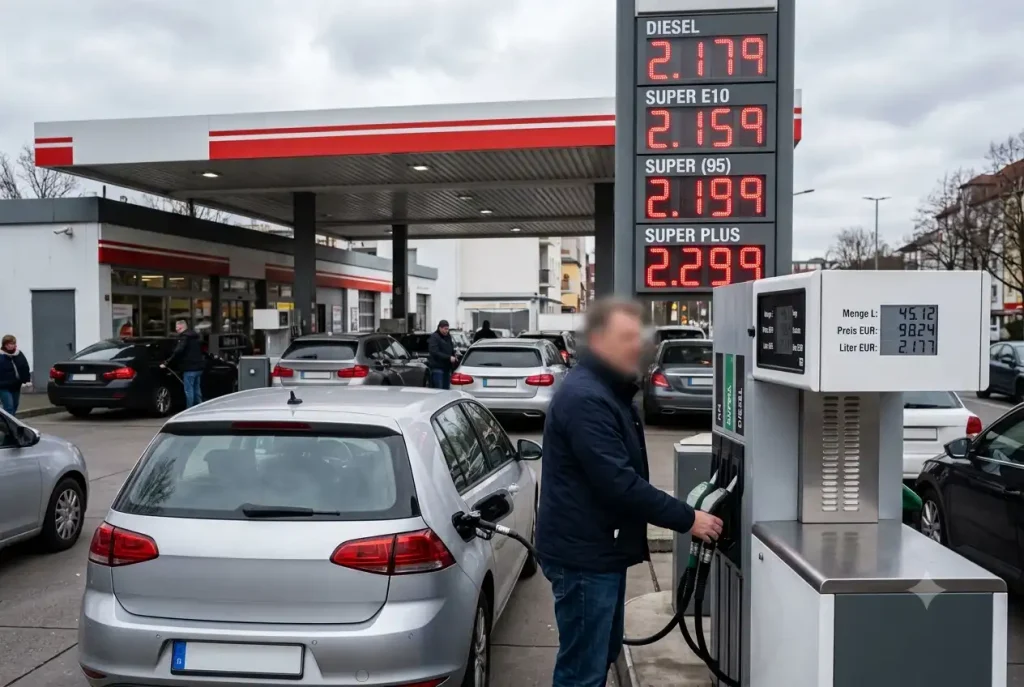
The Fuel prices in Germany are rising significantly again. Nevertheless, the federal government does not plan a new fuel subsidy or other assistance for motorists for the time being after the expiry of the current relief measures. The development is mainly attributable to the increased oil price as well as ongoing geopolitical tensions in the Middle East and uncertainties surrounding the Strait of Hormuz.
Key facts on fuel prices
- Price increases at the pumps: Super E10 currently costs an average of 2.152 euros per litre, diesel 2.177 euros. Diesel, in particular, has become more expensive by more than 23 cents within two weeks.
- No new relief measures: According to government spokesman Stefan Kornelius, neither a new fuel rebate nor a petrol price cap is currently planned.
- High costs for the state: The fuel discount, which expired at the end of June, cost the federal government around 1.6 billion euros.
- Reasons for price development: The high oil price, the tense situation in the Middle East, and risks along the Strait of Hormuz continue to drive fuel prices up.
- Slight easing: According to the ADAC, the latest price data recently indicated a first slight stabilisation in price development.
Fuel prices are rising noticeably
According to the press release, fuel prices have risen continuously in recent weeks. A litre of Super E10 currently costs an average of 2.152 euros, while diesel is priced at 2.177 euros per litre. The increase in diesel prices is particularly noticeable, having become more than 23 cents more expensive within just two weeks. The price of Super E10 is also approaching the peak levels of previous years once again.
The federal government sticks to its line
Despite the increasing burden on drivers, the federal government currently sees no reason for new relief measures. According to government spokesman Stefan Kornelius, the aid provided so far has been concluded, and further measures such as a fuel discount are not currently planned. However, price developments will continue to be closely monitored. The tense geopolitical situation in the Middle East and uncertainties on important trade routes such as the Strait of Hormuz are considered the main causes.
The oil price remains the most important price driver
According to the press release, the increased price of oil is primarily responsible for the high fuel costs. The fuel rebate, which was in effect until the end of June, had temporarily noticeable lowered prices, but cost the federal government around €1.6 billion. A renewal is currently being ruled out, even if isolated political demands for a fuel price cap are being heard. After all, the latest ADAC data show that price developments have recently stabilised slightly.