



The most important things at a glance
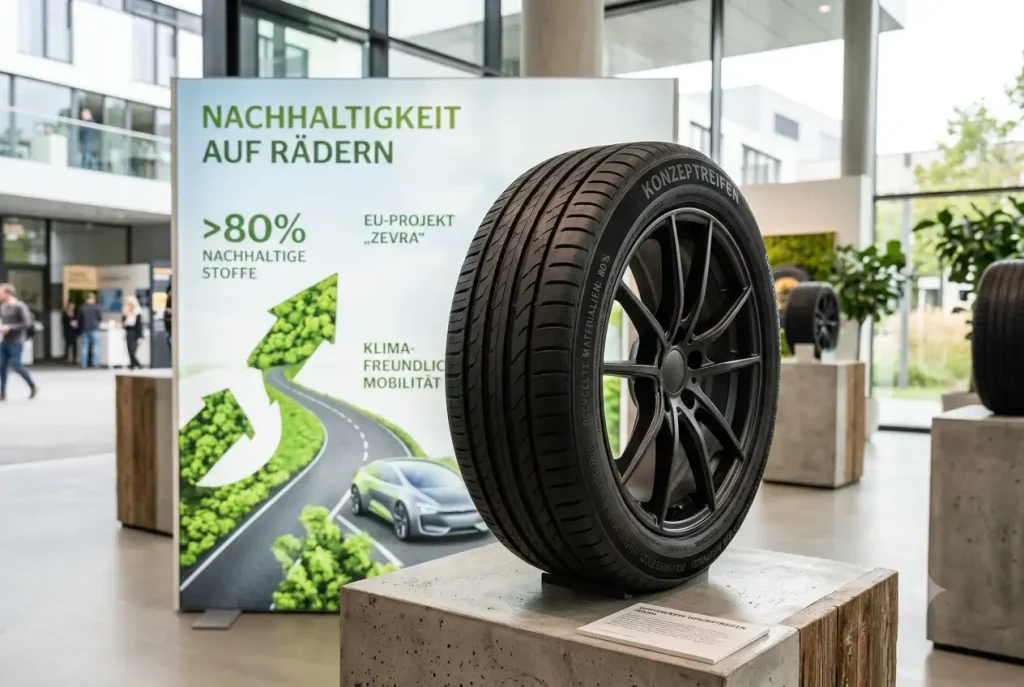
I EU research project „ZEvRA“ features a Continental concept tyre unveiled, whose material base comes from over 80 per cent sustainable sources – without any noticeable loss in safety and rolling resistance. At the same time, the company is calling for reliable framework conditions from policymakers so that such developments can make the step from the test track to mass production.
The key facts about Continental ZEvRA tyres:
- Sole tyre manufacturer in the project: Continental is representing the industry as the only tyre maker in the 28-partner strong EU consortium „ZEvRA“.
- High recycling rate: The prototype is made of 43 per cent recyclates and a total of over 80 per cent sustainable materials.
- Unusual raw materials: These include recycled tire rubber, PET bottles, pyrolysis carbon black and residues such as spent foundry sand.
- Call for standards: For widespread serial production, Europe-wide uniform definitions for secondary raw materials and reliable supply chains are currently lacking.
- Target 2030: By the end of the decade, Continental aims to increase the share of sustainable materials across its entire product range to at least 40 percent.
High efficiency despite recycling rate
Continental is reporting a development milestone in resource-saving tyre manufacturing: as part of the EU research project „ZEvRA“, the supplier has presented a passenger car concept tyre made from over 80 per cent renewable, recycled or mass-balance raw materials.
According to Dr Andreas Topp from tyre development, the pure recyclate content is 43 per cent. Technically, the model is said to require no compromises: according to the company, the tyre achieves the top rating for rolling resistance on the EU tyre label – a criterion that is particularly crucial for the range of electric vehicles.
From PET yarn to foundry sand
To achieve these quotas, Continental is relying on a range of alternative secondary materials. Among other things, the structure contains processed steel, end-of-life tyre rubber, recycled tall oil and yarn made from used PET bottles. The company recovers the required carbon black from end-of-life tyres using pyrolysis processes; residues such as foundry sand serve as a raw material basis for the silica admixture (silicic acid).
Some of these processes have already been trialled in production: at its plant in Korbach, Hesse, Continental has been regularly using recovered carbon black for the manufacture of solid industrial tyres since 2023.
Manufacturers demand clear guidelines from Brussels
For such approaches to be produced profitably in high volumes for passenger cars, the group believes the regulatory authorities must act. According to Jorge Almeida, head of sustainability for the tyres division, widespread use has so far failed due to a lack of market conditions. Above all, Continental is calling for uniform EU standards for recycled materials, the expansion of industrial recycling capacities and streamlined bureaucratic processes.
Meanwhile, the group has firmly set its own targets: while the share of sustainable raw materials in its worldwide passenger car range stood at 28 percent in 2025, it is set to grow to at least 40 percent by 2030.